
Friday, May 01, 2026 | Today's Newsletter | Login
Canada looking at Taxing ‘God’s Business’
By Mata Press Service
A controversial federal report could see churches, temples, mosques, and other faith-based organizations across Canada lose their charitable status, upending decades of public policy that tied religion with charitable service.
The Frontier Centre for Public Policy has released a detailed critique of the measure, warning that eliminating “the advancement of religion” from Canada’s list of recognized charitable purposes would trigger “profound financial and social consequences” for faith communities nationwide.
The 71-page study, authored by theologian Pierre Gilbert, examines the 2025 pre-budget recommendations of the House of Commons Standing Committee on Finance. Among the committee’s 462 proposals—based on over 800 submissions—is Recommendation 430, which calls for amendments to the Income Tax Act to remove religious advancement as a charitable category.
The suggestion originated from the BC Humanist Association (BCHA), a secular advocacy group pressing for what it calls “public neutrality” toward religion.
Gilbert’s report, titled Revoking the Charitable Status for the Advancement of Religion: A Critical Assessment, argues that the recommendation represents the most significant challenge to Canada’s faith sector in generations. “This little-known committee made two recommendations that, if implemented, could have serious consequences for churches, mosques, Hindu temples, synagogues, and pro-life organizations,” the paper warns.
Religious organizations currently make up between 30% and 40% of Canada’s registered charities, representing tens of thousands of institutions. They enjoy exemptions from income tax and the ability to issue donation receipts—both critical to their survival.
If the recommendation were implemented, the CRA’s “revocation tax” could apply—a one-time penalty equal to 100% of the fair market value of an organization’s assets minus liabilities. Affected institutions would have only one year to transfer assets to another charity or face seizure. “The Salvation Army would, in fact, lose income tax exemptions and the ability to issue charitable tax receipts for donations,” the report notes.
Such a change “could devastate small congregations already struggling,” said Julia Beazley of the Evangelical Fellowship of Canada, which has joined other groups—including the Christian Legal Fellowship, Imagine Canada, and the Canadian Interfaith Conversation—in urging the federal government to reject the proposal.
In one example cited by Gilbert, two churches in Iqaluit—one Catholic and one Anglican—were ordered in 2022 to pay annual property taxes totalling more than $60,000 after losing exemptions. “That would likely force them into delinquency,” their leaders said.
The report estimates Ottawa forfeits $1.7 billion to $3.2 billion annually through religious charitable exemptions. But Gilbert argues that the social benefits generated by churches, synagogues, mosques, and temples far outweigh that cost.
According to studies from Cardus and Relven, faith organizations contribute an estimated $16.5 billion annually to Canadian communities through food banks, shelters, counselling, youth programs, and economic activity—a measure known as the “Halo Effect.” “The congregations’ Halo Effect is 10.47 times the value of tax exemptions and credits, on average,” Gilbert writes.
Eliminating religious charitable status, he warns, would create “a net loss to the nation,” hitting local economies and vulnerable populations dependent on faith-based services.
The push to remove religion’s charitable standing, Gilbert argues, stems from “rising secularism, fiscal desperation, and ideological intolerance.” He frames the BC Humanist Association’s campaign as part of an effort to replace “freedom of religion” with “freedom from religion.”
“Canadian society does not merely maintain respectful boundaries between religious and secular spheres but seeks instead to undermine faith in God and the legitimacy of religious institutions,” he writes.
The report also highlights the role of federally funded advocacy groups such as Rainbow Faith and Freedom, which received nearly $1 million over four years to “end religious-based discrimination.” Gilbert questions why secular or activist organizations promoting values akin to belief systems are permitted charitable status while calling for its removal from churches. “If the government is to revoke charitable status for religious organizations… it should by the same logic reassess the status of groups like the BC Humanist Association,” he argues.
Gilbert grounds his defense in history, tracing the charitable category back to England’s 1601 Statute of Charitable Uses, adopted into Canadian law after Confederation and reaffirmed through successive tax acts.
He argues revocation could violate Section 2(a) of the Charter of Rights and Freedoms, which guarantees “freedom of conscience and religion.” Faith-based service, the paper contends, is an extension of that right in practice. “The sudden revocation of charitable status would fundamentally alter Canada’s legal framework and could constitute an unreasonable limitation on freedom of religion,” he writes.
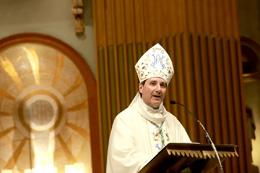
Cardinal Frank Leo, head of the Archdiocese of Toronto, echoed that sentiment in a letter to Finance Minister Dominic LeBlanc, calling the proposal “utterly deplorable and unacceptable.” The policy, he said, “would go against Canada’s long-standing recognition of the irreplaceable role of faith, worship, and religion in society”.
Not all MPs on the Finance Committee supported Recommendation 430; members from the Conservative Party appended a dissenting opinion warning that the change would politicize religion and “erode constitutional freedoms.”
Advocates like the Catholic Civil Rights League and Canadian Conference of Catholic Bishops have urged Christians to lobby their MPs and candidates before the next federal election. “This is part of a troubling trend of increasing restrictions on religious freedom in the public square,” said Phil Horgan, CCRL president. “Faith-based charities provide food for the hungry and shelter for the homeless. Removing their charitable status would jeopardize all of this”.
The Evangelical Fellowship of Canada has also called for public engagement. “We are very concerned about the recommendation,” Beazley said. “The thousands of churches and faith-based organizations across Canada that are religious charities benefit their participants, their communities, and Canadian society as a whole”.
Despite the gravity of the threat, Gilbert laments a muted response from Canada’s church community. “Unfortunately, Canadian churches have not mounted a defence of their charitable status,” the paper says.
He urges religious organizations to “respond proactively through education, advocacy, and reasserting their prophetic mission.” Congregations should consider reapplying under other categories—education or community benefit—if necessary.
“The potential revocation of the charitable status of Canadian churches should be viewed not as a threat but as an urgent call for them to recommit to their life-affirming mission,” Gilbert concludes. “Only by embracing such bold and audacious action can the church restore its status as an important and relevant institution within Canadian society”.
Leave a comment