
Thursday, March 12, 2026 | Today's Newsletter | Login
Love wasn’t always in the air on Valentine’s Day
Commentary
By Louise McEwan
Valentine’s Day did not begin with romance, flowers or sentimental gestures. Its roots lie in a pagan fertility festival marked by animal sacrifice, ritual violence and beliefs that would be unrecognizable and uncomfortable to modern celebrants.
In mid-February, ancient Romans marked Lupercalia, a fertility festival associated with Faunus, a god linked to agriculture and nature. The festival included the sacrifice of animals, typically goats and, according to some sources, dogs. Their blood was used in ritual acts believed to promote purification and fertility.
As part of the ceremony, strips cut from goat hides were dipped in sacrificial blood and used in fertility rites. Ancient writers describe young women presenting themselves to be struck with these strips, believing the ritual would help them conceive in the coming year. Later accounts suggest that some form of pairing or matchmaking may have followed, although historians note that claims of a formal male-female lottery are not firmly supported by surviving Roman sources.
February itself already carried symbolic weight in Roman culture. The month was associated with purification and renewal. Its name derived from februa—the Latin word for purification rites—which made it a natural setting for festivals tied to fertility and rebirth long before romantic love entered the picture.
By the late fifth century, Christianity had become dominant within the Roman Empire, and pagan festivals such as Lupercalia fell out of favour. Pope Gelasius I, who led the Church from 492 to 496 AD, formally condemned the celebration.
Around the same period, Feb. 14 became associated with the feast day of Saint Valentine although historians caution that the relationship between the suppression of Lupercalia and the establishment of Valentine’s Day is suggestive rather than proven.
The figure of Saint Valentine himself is difficult to pin down. Early Christian records refer to more than one martyr named Valentine, and their stories appear to have merged over time. According to later tradition, one Valentine was a third-century Christian priest who lived during the reign of Emperor Claudius II. Legend holds that Claudius restricted marriage for young men, believing unmarried soldiers fought more effectively, and that Valentine defied the order by performing secret weddings.
What followed belongs firmly to Christian legend rather than documented history. Valentine was said to have been imprisoned and executed, with accounts describing beatings and eventual beheading. One enduring legend claims that while awaiting execution, Valentine healed the daughter of a Roman official and sent her a farewell note signed, “From your Valentine,” a phrase that would later become inseparable from the holiday.
The association between Valentine’s Day and romantic love emerged centuries later. In medieval Europe, the rise of courtly love—a literary and social tradition emphasizing idealized romance, devotion and emotional restraint—reshaped how the day was understood.
By the late 14th century, the poet Geoffrey Chaucer, often regarded as the father of English literature, helped popularize the romantic association in his poem The Parliament of Fowls, which imagined Feb. 14 as the day birds chose their mates. From that point forward, Valentine’s Day gradually became linked with love and courtship.
The modern shape of the holiday owes much to the Victorian era. Advances in printing, rising literacy rates and reliable postal services made the exchange of Valentine cards widespread and socially expected. By the mid-19th century, mass-produced cards had transformed a private gesture into a commercial custom.
In the modern era, even the Catholic Church has acknowledged the uncertainty surrounding Valentine. In 1969, the Vatican removed Saint Valentine from the General Roman Calendar, citing the lack of reliable historical information about his life.
The roots of Valentine’s Day run deep, blending a pagan fertility festival, Christian martyrdom and centuries of evolving cultural tradition. What began as ritual and remembrance gradually became a day for expressing affection.
Whether marked by a simple card, an expensive gift or no gesture at all, Valentine’s Day remains a reminder that love, however defined, has long occupied a central place in human culture.
Louise McEwan has degrees in English and Theology. She has a background in education and faith formation.
Valentine's Day Celebrations Across Asia
1. Japan
Tradition: Women give chocolates to men.
Giri-choco: "Obligation chocolate" given to colleagues, bosses, or acquaintances.
Honmei-choco: "True love chocolate" given to romantic partners or someone special.
March 14 - White Day: Men return the gesture by giving gifts like chocolates, jewelry, or flowers to women who gave them chocolates on Valentine’s Day.
2. South Korea
Tradition: Similar to Japan, Valentine’s Day involves women gifting chocolates to men.
White Day (March 14): Men reciprocate with gifts for women.
Black Day (April 14): Singles gather to eat jajangmyeon (black bean noodles) to celebrate or commiserate their single status.
3. China
Tradition: Valentine's Day is celebrated in urban areas, but Qixi Festival, the traditional Chinese Valentine's Day, is more culturally significant.
Qixi Festival (7th day of the 7th lunar month): Couples celebrate the legend of the Cowherd and Weaver Girl by exchanging gifts and spending time together.
Modern Valentine's Day: Includes gift-giving (flowers, chocolates, jewelry) and romantic dinners.
4. Taiwan
Tradition: Valentine's Day and White Day are both celebrated, but the roles are reversed compared to Japan and South Korea.
On Valentine’s Day, men give gifts to women.
On White Day, women return the favor.
5. India
Tradition: Valentine’s Day has become popular in urban areas, especially among young couples.
Celebrations include:
Exchanging cards, chocolates, and flowers.
Romantic dinners or outings.
Cultural Context: Some conservative groups oppose Valentine’s Day, seeing it as a Western influence, leading to debates about its cultural relevance.
6. Thailand
Tradition: Valentine’s Day is widely celebrated and considered a day of love for couples and families alike.
Popular Activities:
Exchanging gifts such as flowers (roses are the favorite), chocolates, and teddy bears.
Couples often register their marriages on Valentine’s Day, making it a popular day for weddings.
7. Vietnam
Tradition: Valentine's Day is celebrated with a mix of Western and local customs.
Couples exchange gifts like flowers, chocolates, and cards.
Romantic dinners are common.
Unique Twist: Some regions incorporate traditional elements, blending modern and cultural practices.
8. Philippines
Tradition: Valentine’s Day is one of the most celebrated occasions.
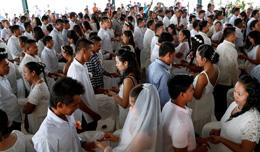
Mass Weddings:
Public events often feature mass wedding ceremonies, where dozens or even hundreds of couples get married simultaneously.
Romantic Gestures:
Couples exchange gifts like flowers, chocolates, and heartfelt letters.
Grand romantic gestures are common.
9. Indonesia
Tradition: Celebrated mainly among young couples in urban areas.
Popular Activities:
Exchanging gifts like chocolates and flowers.
Romantic dinners at restaurants or hotels.
Cultural Considerations: In some regions, conservative communities discourage public displays of affection on Valentine’s Day.
10. Malaysia
Tradition: Celebrated with Western-style customs like gift-giving, romantic dinners, and outings.
Qixi Festival Connection: Some Chinese-Malaysians also observe Qixi Festival as a day for romance.
11. Singapore
Tradition: Valentine’s Day is a blend of Western and Asian traditions.
Activities:
Couples exchange flowers, chocolates, and personalized gifts.
Romantic dinners and short vacations are popular.
Unique Feature: Singaporeans often combine Valentine’s Day with practical aspects, like planning for marriage or proposing.
12. Saudi Arabia (and parts of the Middle East)
Tradition: Valentine's Day celebrations are subtle due to cultural and religious norms.
Some couples exchange gifts in private.
Public celebrations are low-key but have grown in popularity in recent years.
Leave a comment