
Monday, June 29, 2026 | Today's Newsletter | Login
Pipeline Support Rises as Asian Demand for LNG Soars
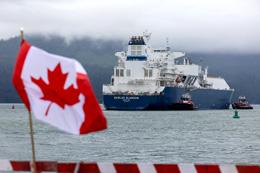
British Columbia, once the centre of Canada’s fiercest pipeline battles, is now showing a sharp shift in public opinion just as global energy shocks are putting new attention on the country’s LNG ambitions.
A new Angus Reid Institute poll says majority support for Enbridge’s Westcoast LNG pipeline expansion, combined with falling opposition to pipeline projects in B.C., points to a changed political landscape for energy development.
The survey, released this week, found that 55 per cent of Canadians support the Westcoast LNG pipeline expansion. In B.C., support rises to 61 per cent, while opposition sits at 17 per cent. That means supporters in the province outnumber opponents by roughly three to one.
Angus Reid said the federal approval of the project is being met with “little public opinion opposition” and provides “further evidence of the changed landscape on pipelines in British Columbia.”
The poll also found that half of Canadians believe Ottawa should move faster on pipeline capacity. Forty-eight per cent nationally and 46 per cent in B.C. said the federal government is “doing too little to build new pipeline capacity.” Another 31 per cent nationally said Ottawa’s approach is about right, while 21 per cent said the government is pushing too hard.
That opposition figure has fallen from 27 per cent in 2019, when the Trans Mountain expansion was dominating national politics.
The numbers land at a time when the global LNG market is facing fresh disruption from the Iran war, rising Asian demand and concern over supply routes through the Strait of Hormuz.
Resource Works, a B.C.-based organization that supports responsible resource development, said the current crisis has renewed interest in Canadian LNG, but Canada is not yet positioned to respond quickly.
“Soaring prices and a shortage of LNG due to the Iran war sparked a flurry of hopes that Canada could provide more to countries running short,” Resource Works writer Don MacLachlan said in a recent commentary. “LNG Canada reports receiving numerous calls from Asian buyers, but ‘all of our LNG is spoken for.’”
That reality frames the larger question now facing Ottawa and B.C.: whether Canada can turn public support, existing infrastructure and global demand into a faster second wave of LNG development.
Resource Works said TC Energy CEO François Poirier has argued that disruption to global LNG supplies makes an expansion of LNG Canada’s Kitimat facility more likely. LNG Canada is expected to consider plans that could double production to 28 million tonnes a year, while new agreements tied to Coastal GasLink would allow more natural gas to move through the existing pipeline system.
The Westcoast expansion approved by Ottawa in April is separate from LNG Canada, but it fits into the same broader energy picture. Angus Reid describes the project as a $4-billion expansion of the southern portion of Enbridge’s Westcoast natural gas pipeline system. The pipeline carries natural gas from northeastern B.C. to consumers and businesses in the Lower Mainland and is expected to help supply the Woodfibre LNG project near Squamish, which is scheduled to begin exporting liquefied natural gas to Asia in 2027.
The poll shows many people support the Westcoast project even though they know little about it. In B.C., 59 per cent said they know only “a little” about the pipeline, while 30 per cent said they know nothing, are unsure or cannot say. Just 11 per cent said they know “a lot” about it.
Still, the trend is clear. B.C. opposition to pipeline projects has fallen sharply from the levels seen during the Northern Gateway and Trans Mountain fights.
In 2012, 57 per cent of British Columbians opposed Northern Gateway. In 2014, 54 per cent opposed the Trans Mountain expansion. By 2019, after federal approval of Trans Mountain, support had climbed to 54 per cent, though opposition remained at 38 per cent.
More recent Angus Reid polling shows a different mood. In February 2025, 55 per cent of British Columbians said they would support reviving Northern Gateway. In October 2025, 56 per cent supported the idea of a new oil pipeline running from Alberta through northern B.C. to the coast. The Westcoast LNG expansion now has 61 per cent support in B.C.
The shift comes as Canadians put more weight on the economy in energy policy.
In 2019, 55 per cent of Canadians said environmental protection should be the bigger priority in shaping energy policy, compared with 45 per cent who chose economic growth. Today, that has flipped. Angus Reid found that 61 per cent now say economic growth should be the top priority, while 39 per cent choose environmental protection.
In B.C., 59 per cent now put economic growth first, up 16 points from 2019. Forty-one per cent put environmental protection first, down 16 points.
Resource Works argues that Canada’s opportunity is tied to geography, reliability and speed. Western Canadian LNG can reach Japan in about 10 days from Kitimat, compared with roughly 25 days from the U.S. Gulf Coast, cutting shipping costs and lowering emissions from LNG carriers.
It also points to Canada’s Montney natural gas resource as a major supply base for Asian customers looking for energy that does not move through contested routes.
“Canada has the resources, specifically in the massive Montney shale, to meet those needs,” MacLachlan wrote. “It just needs the will to get projects over the line.”
That has become the central challenge for the federal government.
Prime Minister Mark Carney’s Major Projects Office was created to speed up approvals for projects considered to be in the national interest. Resource Works noted that among the projects referred to the office are the possible expansion of LNG Canada, the Nisga’a Nation’s Ksi Lisims LNG project and phases of B.C. Hydro’s North Coast Transmission Line, which would support LNG and other resource developments.
But the organization said there has been little public reporting on whether the office is shortening timelines.
The Angus Reid data suggests Ottawa may now have more public room to move than it had during earlier pipeline battles. The share of British Columbians who say the federal government is pushing too hard on pipelines has dropped from 37 per cent in 2019 to 23 per cent today.
Alberta remains the strongest voice for more pipeline construction, though pressure there has softened. In 2019, 83 per cent of Albertans said Ottawa was doing too little to build pipeline capacity. That figure now sits at 64 per cent.
The Angus Reid Institute conducted the online survey from April 24 to 28 among 2,360 Canadian adults. The sample was weighted to reflect the Canadian adult population by region, gender, age, household income and education. For comparison purposes, a probability sample of that size would carry a margin of error of plus or minus two percentage points, 19 times out of 20.
Leave a comment