
Wednesday, August 12, 2026 | Today's Newsletter | Login
Canada Is Fighting Organized Crime Wrong
Commentary
By Scott McGregor
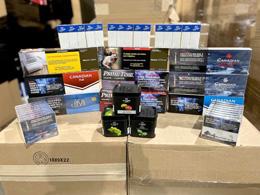
Alberta Gaming, Liquor and Cannabis (AGLC) investigators, supported by Edmonton police, seized nearly 158,000 cartons containing more than 31.6 million illegal cigarettes from a commercial property in June.
The shipment was valued at more than $29 million and represented an estimated $9.4 million in avoided provincial taxes and is the largest contraband tobacco seizure in AGLC history.
The tax loss is significant, but it is not the most important number. Moving 31.6 million cigarettes requires capital, transport, secure storage, communications, distributors and a market capable of absorbing the product. It also requires a system to collect and move millions of dollars outside the legitimate economy. That is not casual smuggling. It is a functioning criminal supply chain.
Canada continues to treat illicit tobacco mainly as a regulatory, public health and revenue problem. This approach counts cartons and calculates lost taxes while giving less attention to the organization behind the shipment. Cigarettes are useful to organized crime because demand is predictable, profits are high, and enforcement consequences are generally less severe than those attached to fentanyl, firearms or human trafficking. The trade can generate cash, test routes and sustain the infrastructure needed for more damaging criminal activity.
A truck does not care whether it carries tobacco, cocaine or precursor chemicals. Warehouses, front companies, cash couriers and underground financial channels are equally adaptable. Once a network has reliable drivers, storage locations and wholesale buyers, changing the commodity is largely a commercial decision. Criminal organizations understand this flexibility better than the agencies tasked with stopping them.
There is no public evidence linking the Edmonton tobacco seizure directly to Alberta’s fentanyl networks, and none should be implied. The cases do, however, expose the same operating environment. In October 2024, the Alberta Law Enforcement Response Teams dismantled a fentanyl “superlab” near Valleyview. Investigators found processed fentanyl, 4,200 litres of suspected precursor chemicals, 1,500 litres of chemical waste and industrial equipment. Police assessed that the facility had produced bulk quantities for years and supplied a wider Western Canadian market.
The Valleyview operation was not a local drug den. It was an industrial production site supported by imported chemicals, specialized equipment, rural property and interprovincial distribution.
A separate interprovincial investigation announced in May 2026—led by Winnipeg police with the RCMP and other agencies—showed how those distribution networks can operate across provincial boundaries. Investigators tracked a network that warehoused drugs in Alberta and moved them east into Manitoba and Ontario. The investigation ended in 33 arrests and the seizure of roughly 339 kilograms of methamphetamine, 175 kilograms of cocaine and 11 kilograms of fentanyl, worth about $37 million and tied to Mexican cartels. Eighty kilograms of cocaine were seized in Edmonton alone.
Alberta is not just consuming illicit goods; it is being used as a production, storage and distribution platform.
Government still divides these threats by product and mandate. Tobacco may begin with a provincial regulator, drugs with a police unit, border movements with the Canada Border Services Agency, tax offences with revenue authorities and suspicious transactions with the Financial Transactions and Reports Analysis Centre of Canada. Each agency has a legitimate role, but the network can disappear between those jurisdictions. Organized crime does not organize itself according to government reporting lines.
American authorities take a broader view. The U.S. Bureau of Alcohol, Tobacco, Firearms and Explosives states that illegal tobacco distribution often finances or launders proceeds for narcotics trafficking, violent crime and terrorism. Its response includes financial investigations, asset seizure and the dismantling of criminal organizations, not simply confiscating the product.
Canada should apply that same logic to every major tobacco seizure. Investigators should identify who financed the shipment, who controlled the property, which businesses and vehicles supported distribution and where the proceeds were intended to go. Names, addresses, telephone numbers, companies and financial intermediaries should be compared against drug, firearms, border and money laundering files. The cartons are evidence; the network is the target.
The Edmonton seizure was an enforcement success, but its scale is also a warning. Alberta has now hosted both an industrial fentanyl laboratory and the largest contraband tobacco seizure in provincial history. The cases are not proven to be connected, yet both relied on capital, transportation, commercial space and organized distribution.
A carton of illegal cigarettes appears minor beside a kilogram of fentanyl. That is precisely why the trade is so useful. Canada will continue winning seizures and losing the larger fight until it stops treating illicit products as separate problems and starts dismantling the criminal supply chain that moves them.
Scott A. McGregor is a senior fellow with the Frontier Centre for Public Policy
Canada’s Contraband and
Fentanyl Crackdown at a Glance
• 31.6 million illegal cigarettes seized in Edmonton
In June 2026, Alberta Gaming, Liquor and Cannabis investigators seized nearly 158,000 cartons of contraband cigarettes from a commercial property. Valued at more than $29 million, it was the largest illegal tobacco seizure in AGLC history and represented about $9.4 million in avoided provincial taxes.
• 45 million cigarettes seized in Alberta in six months
During the first half of 2026, Alberta enforcement agencies seized more than 45 million illegal cigarettes worth an estimated $41 million, underscoring the scale of the underground tobacco market.
• Canada’s largest fentanyl superlab dismantled in B.C.
In October 2024, RCMP investigators shut down a sophisticated drug laboratory in British Columbia and seized about 54 kilograms of fentanyl, 390 kilograms of methamphetamine, cocaine, firearms, explosives and large quantities of precursor chemicals.
• Alberta fentanyl lab had industrial-scale capacity
That same month, investigators dismantled a fentanyl production site near Valleyview, Alberta. Police seized processed fentanyl, 4,200 litres of suspected precursor chemicals, 1,500 litres of chemical waste and industrial equipment.
• Project Puma crossed drugs and tobacco
An interprovincial investigation announced in May 2026 resulted in 33 arrests and the seizure of about 339 kilograms of methamphetamine, 175 kilograms of cocaine, 11 kilograms of fentanyl and 1.35 million illicit cigarettes.
• Newfoundland bust combined tobacco, drugs and guns
Project Bourbon led to the seizure of 9.5 million contraband cigarettes, 20.5 kilograms of cocaine, other drugs, firearms, cash and vehicles.
Leave a comment