
Thursday, October 01, 2026 | Today's Newsletter | Login
Finding the Words For A New Life in Canada
By Samantha McLeod
Mata Press Service
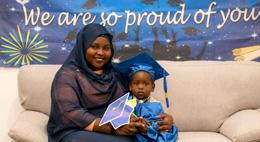
“When I first came here, I started at zero,” Fatna Hamid says through interpreter Lina.
By “zero,” she means beginning again.
Fatna had traded Kenya’s heat for the Canadian cold, arriving in a country where she understood only fragments of English. Written words were difficult to decipher. Everyday tasks that many people barely think about, from shopping and banking to making appointments and registering a child for school, could feel like a maze.
Her young son, Munzir, was struggling too.
He was anxious around unfamiliar people and became distressed whenever he had to leave his mother’s side. Mother and son were both trying to find their footing in a place they were expected to make home.
Six months later, their world is beginning to look very different.
Fatna now shops on her own. She can walk into a bank knowing what she needs to do. She understands far more English than she is yet comfortable speaking and, although reading remains difficult, she has set herself a goal.
One day, she wants to tell her own story without an interpreter.
Munzir has been changing beside her.
The little boy who once struggled to separate from his mother is making friends, learning to share and take turns and becoming so comfortable at gatherings that he sometimes refuses to leave because he is having too much fun.
Their progress began with someone knocking on their door.
SMART, or Supporting Mothers and Raising Toddlers, works with families whose children are between 18 months and three years old. A coordinator trains a home visitor in child development, literacy and practical life skills. The home visitor then brings that knowledge into the family home, helping mothers become their children’s first teachers.
The learning travels from one person to another.
For Fatna, that has meant far more than preparing Munzir for preschool.
SMART has helped her understand how to navigate the country around her. Monthly gatherings offer information about banking, dental care, family health and the public services families rely on every day.
Many SMART home visitors are immigrants themselves. The work can give them Canadian experience, new skills and the confidence to pursue further education or employment.
“When women come into the program, they are often hesitant and dependent,” says Angie Naslund, the program coordinator. “Then, after three years, they may be talking about becoming teachers, education assistants or entering the workforce.”
“They are free and they are independent,” she says.
That progression can continue through the family.
When Munzir turns three, he can move into HIPPY, a kindergarten-readiness program that introduces young children to vocabulary, letters, numbers, shapes and the routines of early learning.
As he prepares for school, Fatna can continue strengthening her own English and literacy skills. Mother and son move forward together.
For Munzir, it may be learning a new word or becoming comfortable in a room full of other children. For Fatna, it may be understanding a form, managing an appointment or walking into a bank without needing someone beside her.
Their story is one of the reasons Decoda Literacy Solutions is marking Literacy Month this September with its Your Gift. Their Next Chapter. campaign.
Across British Columbia, 41 per cent of adults have literacy skills below Level 3, generally considered the level needed to understand, evaluate and use more complex information at work, in education and in everyday life.
“Literacy is about much more than reading and writing,” says Maureen Kehler, Acting Executive Director and Program Director of Decoda Literacy Solutions.
“It gives people the knowledge, skills and confidence to pursue their goals, participate fully in their communities and create a more secure future for themselves and their families.”
Decoda, B.C.’s provincial literacy organization, supports 101 Literacy Outreach Coordinators and more than 400 community literacy programs across the province. Those programs work with children, families, youth, adults and seniors, responding to needs identified within individual communities.
“Investing in literacy means investing in stronger families, a more capable workforce and healthier, more resilient communities,” Kehler says.
That is the idea behind Your Gift. Their Next Chapter.
Follow the campaign: #YourGiftManyChapters
Decoda by the Numbers
• More than 400 B.C. communities supported through community-based literacy initiatives.
• 101 Literacy Outreach Coordinators connect local organizations, learners and resources across the province.
• 41% of adults in British Columbia have literacy skills below Level 3—the level generally needed to understand, evaluate and use more complex information at work, in education and in everyday life.
• 60,582 children and youth participated in community-based literacy programs in 2024.
• 54,022 adults and seniors took part in programs to improve their own literacy or support their children’s learning in 2024.
• 102 Community Adult Literacy Programs received Decoda training, resources and support.
• 494 literacy practitioners took part in 11 Decoda professional-development webinars in 2024.
• 60,000 average readers per issue reached through The Westcoast Reader, Decoda’s publication for adult English-language learners.
• $43,000+ raised during Literacy Month to support literacy learning in B.C. communities.
Leave a comment