
Wednesday, November 18, 2026 | Today's Newsletter | Login
“First, we must build the table”
By Mata Press Service
The Filipino Legacy Society has issued an open letter urging B.C.'s Filipino organizations to set aside their differences, just as a new provincial government prepares to decide how $15 million for a long-awaited Filipino Cultural Centre will be spent.
The letter, titled "We Are Family," invites Filipino groups, community leaders and advocates to "come together" and "find common ground." It does not name any organization or dispute. But it arrives after more than a year of open friction among the groups competing to build the centre, over who should lead it, where it should go and whether it should be tied to a private hotel development.
The timing is pointed. On Oct. 7, both the BC NDP and the Conservative Party of B.C. promised $15 million toward a Filipino cultural centre. The Conservatives, led by Lorne Doerkson, won a majority on Oct. 24. Their pledge, which the party said would unlock matching federal money for a total of $30 million, is now expected to be delivered — and someone will have to receive it.
The one-page letter says Filipino British Columbians have long gathered in "borrowed spaces" such as church basements, community halls and private homes, and deserve a permanent cultural home in Vancouver.
It calls recent commitments toward a permanent centre "an important step forward" that reflects decades of advocacy. It also concedes the community is divided. "There will still be disagreements," the letter says, but no dispute between organizations or leaders "should define the Filipino community as a whole."
The society frames the letter as an invitation to listen and talk. "There is room for everyone at the table," it says, "but first we must build the table." It closes in Tagalog: Isang pamilya. Isang hangarin. — One family. One aspiration.
Society chair Warren Dean Flandez has used the same language in public. In early November he told local outlet 604 Now the group is ready to work with all levels of government and community organizations, and invoked bayanihan, the Filipino tradition of collective effort.
B.C.'s Filipino community, one of the largest in Canada, has sought a cultural centre since the 1970s. In recent years, four organizations have pursued the project: Mabuhay House Society, Filipino BC, the National Pilipino Canadian Cultural Centre (NPC3) and the Filipino Legacy Society, the newest of the group.
The Legacy Society is partnered with PortLiving, the development firm led by Filipino-Canadian developer Tobi Reyes, which says it has been working toward a centre since 2009. Last December, Mayor Ken Sim's ABC Vancouver majority passed a motion directing city staff to prioritize review of a PortLiving plan for two hotel towers at 1940 Main St. and 143 East 3rd Ave., with the cultural centre inside.
That motion drew sharp objections. Mabuhay House, which has worked on its own proposal since 2021 with endorsements from more than 90 Filipino organizations, declined to support it.
Its chair, Lester De Guzman, told CBC "there's no consultation." Filipino BC chair RJ Aquino called the mayor's claim that the motion created no bias "frankly, disingenuous," and raised concerns about PortLiving's financial history. The Main Street property had been the subject of foreclosure proceedings; Reyes told council his company had repaid more than $400 million in debt and settled its property tax issues.
Some community members also objected to housing a cultural centre inside a hotel. Filipino BC has since announced a rival site, a 3.12-acre former car dealership at 396 Southwest Marine Dr., with developer Hungerford Properties and South Vancouver Neighbourhood House.
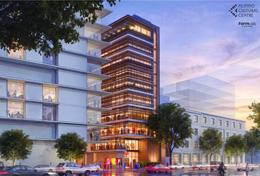
In October, as the Post reported, PortLiving and the Legacy Society revised their plan. It now calls for a stand-alone, 10-storey, 45,000-square-foot centre at 160 East 2nd Ave. in Mount Pleasant as the first phase of a broader "Main Street Campus." Flandez said the change responds to community and government feedback. Meanwhile, the city has backed an interim Filipino Cultural Centre, operated by the Legacy Society, in the Library Square atrium downtown.
The 2025 Lapu Lapu Day attack, which killed 11 people at a Filipino festival in Vancouver, gave the campaign new urgency. It has also brought separate strains, including public questions from former Filipino BC directors about how donations for victims were distributed.
With a funding pledge now attached to a government, the open question is which proponent, site and governance model it will support. The Conservatives' campaign promise referred to a centre "in the heart of Vancouver" but named no site or partner. Neither did the NDP's.
Mabuhay House has framed its effort as a provincial centre serving Filipinos across B.C., and in October said it would hold all parties accountable for their commitments. Filipino BC has said it is not opposed to other proposals. PortLiving targets a 2027 construction start for the East 2nd Avenue building, subject to city approvals, funding, governance arrangements and further consultation.
The Legacy Society's letter does not say what a shared table would look like or who would sit at it. Its critics have consistently asked for transparent governance and broader consultation.
Leave a comment