
Tuesday, November 24, 2026 | Today's Newsletter | Login
Carney's Asia Trade Push Faces Canadian Reality Check
By Mata Press Service
Canada has secured two major trade agreements in Southeast Asia, but new research suggests Prime Minister Mark Carney faces a problem closer to home. Most Canadians know little about the region, and few see it as a priority for trade.
The findings, released by the Asia Pacific Foundation of Canada (APF Canada), come days after Carney announced the conclusion of trade negotiations with the Philippines and the Association of Southeast Asian Nations (ASEAN) during his visit to Manila.
The agreements are part of Ottawa's push to reduce Canada's heavy reliance on the United States and find new markets for Canadian products and services.
But researchers warn that signing trade deals is only the beginning. Canadian businesses must be willing to enter these markets and build relationships with new customers.
"While Canadians hold favourable views towards Southeast Asia, the region is not on their mental map," wrote APF Canada researchers Charles Labrecque and Anastasia Ufimtseva in their November 19 analysis.
A new APF Canada-Angus Reid poll found that 71 per cent of Canadians have a favourable view of Southeast Asia, compared with 38 per cent for China and 36 per cent for India.
Yet only 10 per cent believe Canada should develop closer trade ties with Southeast Asia.
That compares with 58 per cent who favour stronger trade relations with Europe, 24 per cent with Mexico, 22 per cent with Britain and 20 per cent with the United States.
Japan and South Korea remain the most favourably viewed Asian economies, with approval ratings of 88 per cent and 76 per cent respectively.
The findings highlight a gap between Ottawa's efforts to build stronger economic ties with Asia and the public's limited knowledge of the region.
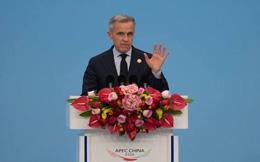
During his November 14 visit to Manila, Carney met Philippine President Ferdinand Marcos Jr. and announced the conclusion of negotiations for a Canada-Philippines free trade agreement.
He also announced that Canada and ASEAN had completed negotiations on a broader agreement covering a region of nearly 700 million people.
The agreements must still go through the necessary approval processes before taking effect.
For Ottawa, the deals are part of a wider effort to find new trading partners as Canada faces growing economic uncertainty in its relationship with the United States.
Southeast Asia is one of the world's fastest-growing regions, with expanding middle-class populations and growing demand for food, energy, education, technology and financial services.
These are areas where Canadian businesses could find new customers.
However, APF Canada says the opportunities may be difficult to turn into actual sales without stronger business connections and greater public awareness.
Earlier surveys found that fewer than one in five Canadians considered themselves knowledgeable about several major Southeast Asian countries.
In 2024, only 17 per cent said they knew much about Singapore, 16 per cent about the Philippines, 14 per cent about Vietnam, 11 per cent about Indonesia and 10 per cent about Malaysia.
A 2025 poll showed similar results.
Only 22 per cent of Canadians said they knew a fair amount or more about Vietnam, compared with 20 per cent for Thailand and 18 per cent for Singapore.
Interest in travelling, studying or working in the region was also limited.
Just 23 per cent said they planned to visit, study or work in the Philippines over the next decade. The figures were 29 per cent for Singapore, 25 per cent for Vietnam and 20 per cent for Malaysia.
By comparison, 48 per cent expressed similar interest in Japan and 63 per cent in Australia.
The lack of familiarity also works in the other direction.
A 2026 survey by the Singapore-based ISEAS-Yusof Ishak Institute ranked Canada 10th among ASEAN's 11 dialogue partners for strategic importance, behind China, the United States, Japan and the European Union.
The researchers say these findings show that Canada has considerable work to do in building stronger ties with Southeast Asian countries.
Despite limited public awareness, Canada's trade with Southeast Asia has grown rapidly.
ASEAN was Canada's fifth-largest merchandise trading partner in 2025, with two-way trade reaching $52.5 billion, more than double the $21.6 billion recorded in 2016.
But Canada buys considerably more from the region than it sells.
Last year, Canadian imports from Southeast Asia reached approximately $41 billion, while exports totalled $11.6 billion.
Although exports have doubled over the past decade, they still account for only about 1.5 per cent of Canada's total exports.
The region's economic potential remains substantial.
ASEAN has a combined economy worth approximately $6 trillion and recorded economic growth of five per cent in 2025.
The Asian Development Bank expects the region's economy to grow another 5.1 per cent in 2027.
Countries such as Vietnam, Indonesia, Malaysia and the Philippines are also attracting international investment as companies look for manufacturing locations outside China.
Canada has expanded its commercial presence, with Export Development Canada opening offices in Jakarta, Manila, Bangkok and Ho Chi Minh City.
Canadian financial companies, including Sun Life and Manulife, have also expanded their operations in Southeast Asia.
But many smaller Canadian businesses remain focused on familiar markets, particularly the United States and Europe.
APF Canada cited Export Development Canada's latest Trade Confidence Index, which found that only 35 per cent of Canadian exporters use the Comprehensive and Progressive Agreement for Trans-Pacific Partnership, an existing trade deal that includes several Asian countries.
That compares with 50 per cent using Canada's trade agreement with Europe and 69 per cent using the Canada-United States-Mexico Agreement.
"Free trade agreements do not use themselves; companies do," the researchers wrote.
They said smaller Canadian companies, in particular, need better information about local markets and more opportunities to meet potential business partners.
The report also pointed to Australia's experience. Despite its close ties with Southeast Asia, Australia has struggled to turn those relationships into stronger trade and investment.
Australia has responded with a national strategy to improve knowledge of Southeast Asian markets among businesses, government departments and educational institutions.
APF Canada says Canada should make similar efforts through educational exchanges, stronger business networks and closer ties between Canadians and people in the region.
The foundation also notes that Canada has invested more than $51 billion in Southeast Asia, although this represents only about two per cent of Canada's total foreign direct investment abroad.
For Carney, the agreements reached in Manila represent an important step toward reducing Canada's dependence on the American market.
But their success will depend on whether Canadian businesses are prepared to explore unfamiliar markets and build lasting commercial relationships.
"The challenge now is getting more companies and Canadians [to] decide that Southeast Asia is worth their attention," the researchers wrote.
Leave a comment